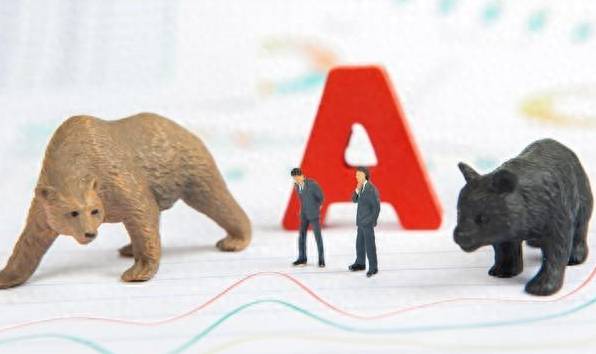
I lost money on my first few stock picks. I read the news, looked at pretty charts, and felt a gut feeling about a tech company. The price went down. It stung. That experience burned a question into my mind that every investor asks eventually: Is it possible to know in advance if the share price will rise? The fantasy of a crystal ball is seductive, but the reality is more nuanced. The short, honest answer is no, you cannot know with certainty. Anyone who tells you they can is selling something. But you can shift the odds significantly in your favor. You can move from blind guessing to making an informed, probabilistic assessment. This isn't about finding a magic formula; it's about understanding the tools that work, the psychological traps that don't, and building a process that separates signal from noise.
What You'll Find Inside
Is It Possible? The Honest Answer
Let's kill the suspense. No algorithm, no guru, and no chart pattern can guarantee a stock's future price. The market is a complex adaptive system influenced by millions of participants, unforeseen geopolitical events, sudden changes in consumer behavior, and plain old randomness. Believing in certainty is the first and most expensive mistake.
What you're really asking is: Can I improve my probability of being right? That's a completely different and achievable goal. Think of it like weather forecasting. Meteorologists don't "know" if it will rain at 3:17 PM next Tuesday. They run models, analyze pressure systems, and say, "There's a 70% chance of precipitation." Your job as an investor is similar. You gather data, assess the quality of the business and its environment, and decide if the probability of the price rising is high enough for you to take a calculated risk.
The core shift is from seeking prediction to practicing probabilistic thinking. This mindset alone will save you from countless bad investments.
Practical Tools for Informed Guesses
Since we've ruled out magic, what's left? A toolkit. No single tool is enough, but combining them creates a much clearer picture.
Fundamental Analysis: The Business Health Check
This is digging into the company's actual financials and operations. You're answering: Is this a good business trading at a reasonable price? Key things I look at:
- Revenue & Earnings Growth: Are sales and profits consistently moving up? A sudden spike might be a red flag, not a green one.
- Balance Sheet Strength: How much debt does it have? Can it easily pay its bills? A strong balance sheet (like Apple's) provides a huge margin of safety during downturns.
- Competitive Advantage (Moat): Does it have a brand, technology, or cost structure that competitors can't easily replicate? Think of Coca-Cola's brand or Microsoft's enterprise software ecosystem.
- Valuation Metrics: Is the current price sensible compared to its earnings (P/E ratio), assets, or growth rate? Buying a great business at a crazy price is still a bad investment.
Resources like the U.S. Securities and Exchange Commission's EDGAR database are essential for getting the raw financial data directly from the source.
Technical Analysis: Reading the Market's Mood
Often misunderstood. It doesn't predict the future. It analyzes past price and volume data to identify patterns and trends in market psychology. It asks: What is the current supply and demand dynamic? Useful concepts include:
- Support and Resistance: Price levels where a stock repeatedly struggles to fall below (support) or rise above (resistance). These aren't magic lines, but they show where big batches of buy or sell orders may be sitting.
- Moving Averages: Smoothing out daily price noise to see the underlying trend. A stock trading above its long-term moving average (like the 200-day) is generally in a healthier state than one trading far below it.
- Volume: Is a price move happening with a lot of trading (strong conviction) or just a little (weak, possibly fakeout)? A price rise on high volume is more meaningful.
Catalyst Analysis: The "Why Now?" Question
This is the most underrated piece. A great company can trade sideways for years. You need a catalyst—a specific, foreseeable event that could change the market's perception of value. Examples:
- Upcoming earnings report with expected strong guidance.
- Launch of a revolutionary new product (e.g., a new iPhone model, a breakthrough drug approval).
- A major regulatory change that benefits the industry.
- A share buyback program or dividend increase announcement.
Your analysis should tie together: a fundamentally sound business (the engine), a positive technical trend or setup (the wind), and an identifiable near-term catalyst (the spark).
The Prediction Trap: Common Mistakes
After a decade, I've seen the same errors cripple new investors. Avoiding these is as important as any analysis.
| Mistake | Why It Fails | The Better Approach |
|---|---|---|
| Chasing Tips & Headlines | By the time a "hot tip" reaches you, the information is likely already priced in. You're buying the hype, not the value. | Do your own foundational research. Use news to understand a company, not as a buy signal. |
| Over-Reliance on a Single Indicator | "The RSI is oversold, it MUST bounce!" Markets can stay oversold or overbought far longer than you can stay solvent. | Use indicators as context within your broader fundamental and catalyst thesis. They are clues, not commands. |
| Confusing Correlation with Causation | "Stock X went up every time this pattern appeared in the past." The future is not a perfect replay of the past. | Look for the logical reason behind a pattern. Does the pattern make sense given the business context? |
| Ignoring Macro Factors | A perfect stock pick can be dragged down by rising interest rates, a recession, or sector-wide regulation. | Have a basic view of the economic environment. Is the tide rising or falling? |
| No Exit Plan | You get obsessed with being right about the entry price, but have no idea when to sell if you're wrong. | Before you buy, decide: At what price will I admit my thesis is broken and sell? This is your stop-loss. |
A Real-World Scenario: Analyzing Tesla
Let's apply this. Say it's early 2023 and we're looking at Tesla (TSLA). The stock had fallen sharply. Can we know if it will rise?
Step 1: Fundamental Check. Margins are industry-leading. Revenue growth is slowing but still strong. Balance sheet is solid with minimal debt. Competitive moat in battery tech and software is debated but real. Valuation is still high compared to traditional automakers, but it's not a traditional auto company.
Step 2: Technical Context. The stock is trading below its key moving averages, in a clear downtrend. Volume is high on down days, showing selling pressure. No technical buy signal yet.
Step 3: Catalyst Hunt. Upcoming catalysts? The Cybertruck launch is delayed. New Gigafactories are ramping up, which could improve margins. The big one: Potential for significant volume growth as new factories hit stride.
The Assessment: You can't know. But you could build a probabilistic thesis: "The business fundamentals remain strong, but the stock is out of favor technically. If the Q3 earnings show that production ramp is succeeding and margins are holding, it could be a catalyst for a trend reversal. My probability of being right is moderate, but the potential upside is high if the growth narrative returns." You then decide if that probability warrants an investment, and you set a clear level (e.g., a break below the yearly low) where you'd exit if wrong.
This is the work. It's not a yes/no answer. It's a structured thought process.
Your Burning Questions Answered
So, is it possible to know in advance if the share price will rise? You now have the real answer. Absolute knowledge is a myth. But a disciplined framework combining fundamental health checks, technical mood readings, and specific catalyst hunting gives you a powerful edge. It transforms the question from "Will it go up?" to "Given what I know, what's my assessed probability, and is the potential reward worth the risk?" That's how you stop guessing and start investing.
The market will always have the final say. Your job isn't to outsmart it every time, but to make enough well-reasoned decisions that, over time, the odds work in your favor. Ditch the crystal ball. Pick up the toolkit.